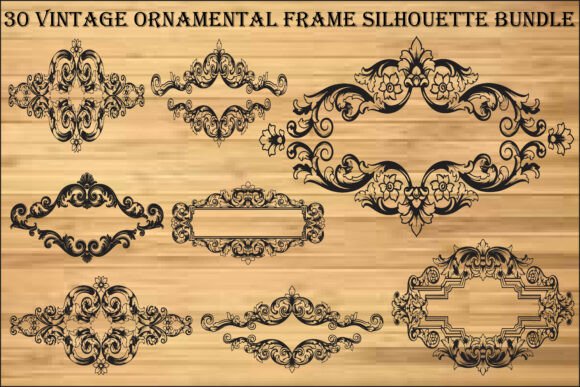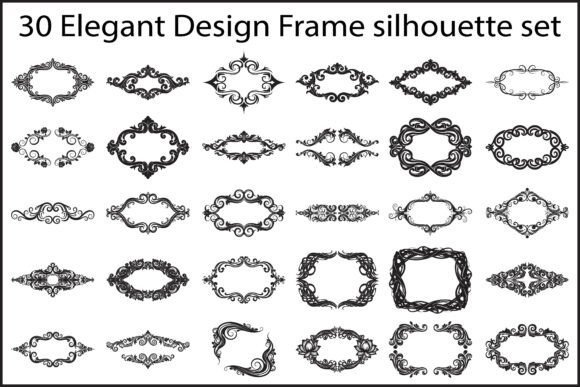
30 Elegant Design Frame Silhouette Set
A Designer’s First Look: Graceful, Not Fussy
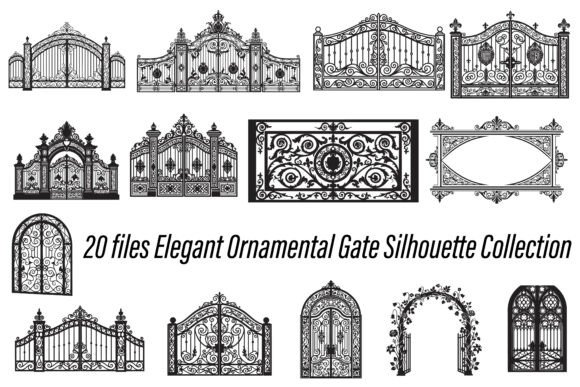
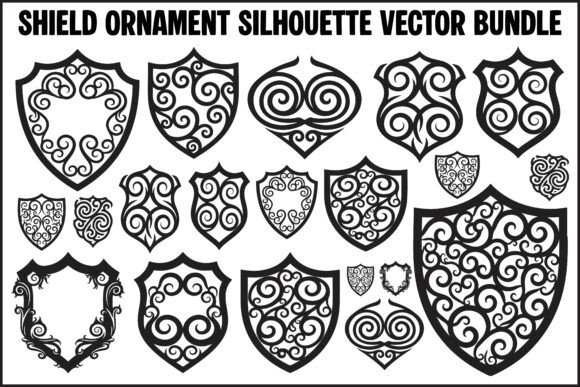
When I opened the 30 Elegant Design Frame Silhouette Set, my first thought wasn’t “pretty”—it was “usable.” These aren’t fussy flourishes or overwrought motifs. They’re clean, balanced silhouettes with ornamental symbols placed thoughtfully—think delicate vines, subtle laurels, quiet crescents, and restrained scrollwork. The mood is calm confidence: wedding-ready but not bridal-exclusive, formal enough for boutique branding but soft enough for a baby onesie or linen tea towel. As an embroidery designer who’s stitched hundreds of client projects, I appreciate that these frames don’t compete with your core message—they hold space for it.
Where It Shines in Real Embroidery Projects
I tested three frames from the set on a custom embroidered tote bag for a local florist—linen-cotton blend, medium weight, 5-inch hoop. One frame wrapped neatly around her monogram; another framed a tiny floral motif on the pocket; the third anchored a small tagline along the bottom hem. All three stitched cleanly, with no thread breaks or puckering. That tells me the 30 Elegant Design Frame Silhouette Set was digitized with real-world fabric behavior in mind—not just vector perfection.
It works especially well for:
- Custom apparel: Sweatshirt cuffs, collar accents, or chest pockets—where subtlety reads as intention, not afterthought.
- Baby embroidery: On organic cotton onesies or muslin swaddles, the open shapes avoid dense fill stitch that can stiffen delicate fabric.
- Embroidered patches: Clean outer edges mean crisp cutting and clean backing—no fraying corners when heat-sealed or sewn on.
- Holiday embroidery: A single frame around a “Joy” or “Peace” word art design adds heirloom weight without visual noise.
- Etsy seller assets: Pair one frame with your own hand-lettered phrase or icon—it instantly elevates a digital embroidery file or printable mockup.
Where to Pause—and Test First
These frames are elegant, yes—but elegance doesn’t equal universality. I’ve seen too many crafters rush into stitching only to find a lovely silhouette collapsing on stretchy knit or vanishing on dark fabric. Here’s where the 30 Elegant Design Frame Silhouette Set needs thoughtful handling:
- Small hoop sizes (under 4 inches): Some frames include fine inner linework—test at actual size. What looks graceful at 6 inches may blur at 3.
- Textured or napped fabrics: Like terry cloth towels or bouclé baby blankets—dense satin stitch sections can sink or distort. Use light tear-away + cut-away stabilizer combo.
- Thin or sheer fabrics: Sheer organza or rayon challis? Avoid heavy fill areas unless you back with water-soluble film.
- Curved surfaces (caps, hats): Stick to simpler, more open frames—avoid those with tight inner corners or nested loops that resist hooping smoothly.
- Frequent-wash items: Baby bibs, kitchen towels, aprons—check stitch density. High-density fill areas wear faster. Favor frames with running-stitch outlines or open negative space.
How It Shapes Perception—Before and After Stitching
This isn’t just about what stitches down—it’s about what customers *feel*. A well-placed frame from the 30 Elegant Design Frame Silhouette Set quietly signals care: that this isn’t mass-printed, but considered. On a personalized gift, it transforms “nice” into “meaningful.” On a small shop product—say, a linen pillow cover sold at a craft fair—it adds perceived value without raising your material cost.
For Etsy sellers and handmade brands, consistency matters. These frames share a visual language—same line weight, rhythm, spacing—so using several across different products (a holiday card, a baby blanket, a boutique logo) builds brand recognition without repeating the same motif. And because they’re silhouettes—not literal objects—they scale gracefully across mediums: embroidery, print, foil stamping, even laser-cut wood.
Practical Notes Every Embroidery Designer Should Run Through
Before committing to a client project or listing a finished product, here’s my quick checklist—built from years of trial, error, and repeat clients:
- Test on scrap fabric first—same type, same color, same stabilizer you’ll use on the final piece.
- Check thread color contrast: These frames rely on shape, not saturation. A pale gold thread on cream linen? Gorgeous. Same thread on oatmeal canvas? May disappear. Try black, charcoal, and deep navy mockups.
- Review stitch density: Zoom into the file. Are inner details built with satin stitch (smooth but dense) or running stitch (lighter, more breathable)? Match to your fabric’s tolerance.
- Confirm hoop size compatibility: Not all 30 frames fit a 4×4 hoop. Know which ones do—and which need 5×7 or larger—before quoting a client.
- Inspect small details: Tiny dots, fine connectors, narrow bridges between elements—do they survive digitizing? If unsure, ask the seller for a stitch-count range or sample video.
- Test both light and dark backgrounds: What reads as airy on white may feel lost on charcoal. Simulate in your design software before cutting thread.
- Use proper stabilizer: Even elegant frames need support. Medium-weight cut-away for knits, lightweight tear-away for wovens, water-soluble for sheer layers.
- Verify licensing: Since this is listed under Illustrations and Graphics, confirm whether commercial use—including selling finished embroidered goods or digital embroidery files—is permitted. When in doubt, contact the creator directly.
Final Thought: Quiet Confidence, Not Loud Decoration
The 30 Elegant Design Frame Silhouette Set won’t shout. It doesn’t need to. In a market flooded with busy patterns and over-digitized trends, its restraint is its strength. Whether you’re stitching a one-of-a-kind baby embroidery gift, building cohesive design assets for your craft business, or adding quiet polish to a custom sweatshirt order—the right frame makes the difference between “made with care” and “made with intention.” And that’s the kind of detail your customers remember, recommend, and come back for.