Camping Tent Bonfire Forest Silhouette Graphics
As a graphic designer who’s built brand identities for outdoor gear startups, launched seasonal Etsy collections, and crafted packaging for handmade candle brands, I recently evaluated the Camping Tent Bonfire Forest Silhouette for a real client project: a limited-edition autumn campfire-themed candle line targeting millennial and Gen Z buyers. My goal wasn’t just to find “a nice tent image”—it was to assess whether this illustration delivers intentional visual storytelling, technical reliability, and commercial flexibility across print, digital, and physical product applications.
First Impression: Moody, Cohesive, Instantly Evocative
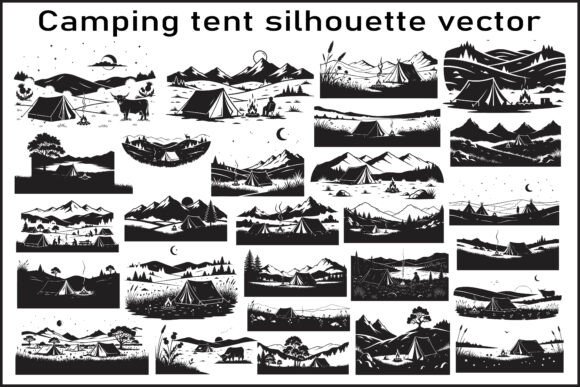
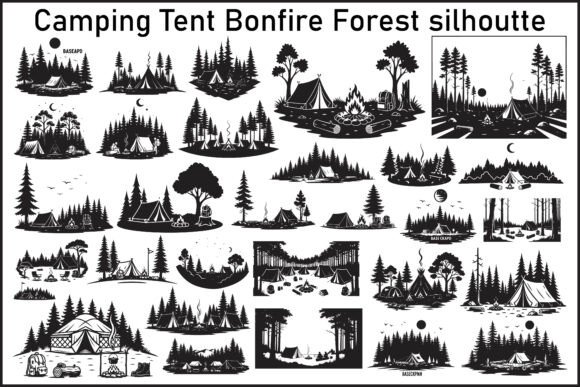
The Camping Tent Bonfire Forest Silhouette lands with quiet confidence. It’s not busy or illustrative in a cartoonish way—it’s a tightly composed black-and-white silhouette that balances negative space and form. The tent leans slightly, the bonfire glows as a soft cluster of radiating lines, and layered forest silhouettes recede into depth without clutter. This isn’t clipart; it’s a graphic design asset built for mood-first branding. It whispers “cozy adventure,” not “generic camping.” That distinction matters when you’re designing for emotional resonance—not just decoration.
Where It Shines in Real Client Work
- Product mockups & packaging design: Placed on matte kraft candle labels or embossed tote bags, it reads clearly at 2–3 inches tall—no pixelation, no lost detail. Its high-contrast black-on-white (or white-on-black) makes it ideal for sublimation design and screen-printed t-shirt design.
- Social media graphics & Canva templates: As a hero element in Instagram carousels or Pinterest pins, it anchors seasonal campaigns—think “Fall Camping Collection” banners or blog headers for outdoor lifestyle publishers.
- Printable design & Cricut projects: With clean vector edges (if SVG is included), it cuts flawlessly on vinyl for stickers or iron-on transfers. I tested it at 0.75” scale on a sticker sheet—still legible, still atmospheric.
- Brand identity accents: Used sparingly as a pattern repeat, border motif, or watermark in editorial design or web design, it reinforces theme without overwhelming typography or visual hierarchy.
- Print-on-demand & Etsy product visuals: It elevates basic mug or poster listings—especially when paired with minimalist sans serif fonts (like Inter or Montserrat) or warm handwritten fonts for contrast and warmth.
Where to Use It Thoughtfully
This isn’t a universal drop-in solution. Its strength lies in atmosphere—not neutrality. Avoid using Camping Tent Bonfire Forest Silhouette in contexts demanding strict minimalism (e.g., corporate tech branding) or ultra-clean visual hierarchy (e.g., medical or financial service websites). It can feel visually heavy in crowded layouts or low-contrast backgrounds—test it over light gray (#f5f5f5) and deep navy before finalizing. Also, skip it for tiny UI icons or app interface elements: its fine bonfire details won’t resolve well below 16px.
Designer Notes You Can’t Skip
- Always test in true black-and-white: Even if the file includes color variants, verify grayscale integrity—some bonfire gradients flatten unpredictably in offset printing.
- Check background contrast: Preview on both light and dark website headers, email banners, and social media stories. PNG transparency must be flawless for seamless layering.
- Scale rigorously: Zoom out to 25% in your layout—does the tent still read as a tent? Zoom in to 300%—are edges crisp, or do they show anti-aliasing artifacts?
- Mock it up, don’t just preview: Drop it into real product mockups (tote bag, sticker sheet, candle jar) before presenting to clients. A great illustration can fall flat without context.
- Verify file formats: Confirm SVG editability (can you adjust stroke weight or separate layers?) and PNG resolution (300 DPI minimum for print). If it’s part of a design bundle, cross-check licensing across all files.
- Font pairing matters: It harmonizes beautifully with sturdy sans serifs (for modernity), organic scripts (for handmade business warmth), and bold display fonts (for campaign posters)—but clashes with overly geometric or ultra-thin typefaces.
- Commercial license is non-negotiable: For client work—especially print-on-demand, merchandise, or digital product sales—confirm the license explicitly permits resale, sublicensing, and unlimited end products. Don’t assume.
Why It Fits Today’s Creative Marketplace
In a sea of generic nature clipart, the Camping Tent Bonfire Forest Silhouette stands out because it’s designed with intention—not just aesthetics. It supports small business branding by evoking authenticity, not stock clichés. Whether used as a sticker design for a local farmers’ market vendor, a recurring motif in a Canva template for content creators, or the central visual anchor in an editorial feature on sustainable camping, it carries weight without shouting. It helps designers deliver more than decoration—it delivers narrative cohesion.
A Final Thought for Practicing Designers
If your client needs “camping,” but what they really need is *connection*, *calm*, and *intentional escape*, then this illustration isn’t just a graphic—it’s a strategic tool. Used deliberately, it strengthens brand consistency, deepens audience engagement, and adds quiet professionalism to even scrappy handmade launches. Just remember: no digital product replaces judgment. Test it. Print it. Live with it for a day in your layout. Then decide—not based on how it looks in the marketplace thumbnail, but how it performs in the real world of client deadlines, production constraints, and human attention.