Continuous Line Design of Wood
A Clean, Quiet Statement — Not a Fussy Filler
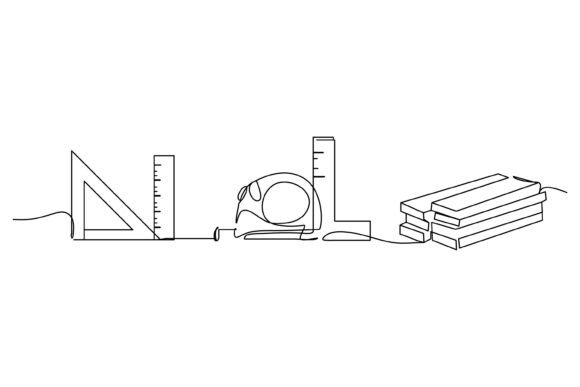
First glance at Continuous Line Design of Wood feels like spotting a well-worn ruler laid across a sunlit workbench — simple, grounded, and quietly intentional. It’s not loud or illustrative in the way botanicals or typography often are. Instead, it leans into restraint: one unbroken line tracing the outline and subtle grain of a wood board measuring ruler, drawn cleanly on white. As an embroidery designer who’s stitched hundreds of client projects — from boutique aprons to baby onesies — I immediately sensed its strength isn’t in detail, but in *recognition*. You don’t need to squint to “get” it. That matters.
Where This Design Earns Its Keep
I tested Continuous Line Design of Wood as a central motif on a natural linen tote bag for a local woodworking studio’s holiday pop-up. No text. No embellishment. Just the design centered on the front panel, stitched in matte ecru thread. The result? Calm authority. Customers paused. They touched the stitch line. They asked, “Is that hand-drawn?” (It’s not — but the single-line flow made it feel that way.) That’s the quiet power of this piece: it reads as handmade even when machine-embroidered.
It shines especially well on:
- Custom apparel — Think crewneck sweatshirts, relaxed-fit tees, or structured caps where subtlety reads as confidence, not afterthought.
- Home + kitchen textiles — A single placement on a tea towel, pillow cover, or oven mitt says “crafted with care,” not “decorated for Instagram.”
- Baby and nursery items — On organic cotton swaddles or muslin burp cloths, its gentle geometry avoids cutesy overload while still feeling warm and intentional.
- Embroidered patches — Because it’s a clean silhouette with no internal breaks, it converts beautifully to sew-on or iron-on patches for tool rolls, workshop jackets, or craft fair merch.
- Digital product previews — As an Illustrations asset, the EPS and SVG files scale crisply for mockups — whether you’re listing on Etsy or pitching to a small shop owner.
Where to Pause — Not Panic, Just Plan
This isn’t a “drop-in-and-stitch” design for every surface. Its single-line nature means success depends heavily on execution — not just file quality. Here’s what I watched for:
- Hoop size & fabric texture: On thick terry cloth towels or nubby canvas, the fine line can blur if stitch density is too low. I added light tear-away stabilizer beneath and ran a test on scrap first — crucial before committing to a full run of kitchen towels.
- Curved or layered surfaces: Caps and baby hats demand careful digitizing adjustments. While the original Continuous Line Design of Wood file is vector-based (great for scaling), it’s not pre-digitized for embroidery machines — so you’ll need to convert or adapt it thoughtfully for curved crowns or tight seams.
- Dark or textured backgrounds: On charcoal sweatshirts or raw-edged denim, contrast matters. I tried it in both black and cream thread — black gave bold clarity; cream offered softness but required tighter tension control. Always test thread color against your final fabric.
- Frequent-wash items: For baby bibs or aprons, I avoided satin or fill stitches entirely — sticking to a clean running stitch version (digitized separately) to keep it lightweight and durable.
What It Adds — and What It Doesn’t Promise
Continuous Line Design of Wood doesn’t shout. It doesn’t mimic realism or pack in decorative flourishes. What it delivers instead is coherence: a visual anchor that supports your brand voice without competing with it. For Etsy sellers offering minimalist handmade goods, it reinforces authenticity. For craft business owners building a cohesive line of workshop-themed products, it becomes a quiet signature — repeatable across patches, tags, and packaging without fatigue.
Customers respond to that consistency. When someone sees the same clean ruler motif on your tote, your tea towel, and your embroidered patch, they register intention — not repetition. That builds trust faster than any sales copy.
Practical Designer Notes — From My Hoop to Yours
Before stitching your first Continuous Line Design of Wood project:
- Check your source files: You’ll receive EPS, SVG, and JPG — ideal for designers who need flexibility, but remember: none are ready-to-embroider machine embroidery design files out of the box. Digitizing is required for actual stitching.
- Test on scrap fabric matching your final substrate — especially for stretchy knits or delicate weaves. Adjust tension and needle size accordingly.
- Review stitch density in your digitized version. Too sparse = broken line; too dense = stiff, raised texture that fights the design’s airy intent.
- Confirm licensing terms before selling finished items or bundling the graphic as part of a digital embroidery file pack. As a Graphics asset, usage rights aren’t implied — verify before commercial use.
- Use black-and-white mockups early. Does it hold up on dark fabric? Does it disappear on busy prints? Simplicity only works when it’s legible.
- Consider pairing it with a single word (“Measure,” “Build,” “Make”) — but only if it serves the product, not the ego.
Final Thought: A Tool, Not a Trend
Continuous Line Design of Wood won’t go viral. It won’t dominate Pinterest feeds. But it will sit perfectly on a handmade apron worn by a ceramicist, rest quietly on the chest pocket of a tailor’s jacket, or trace the edge of a custom gift box for a carpenter’s anniversary. That’s its value: it’s a design that serves the maker, not the algorithm. For embroidery designers and creative entrepreneurs who build slow, thoughtful businesses — not flash-in-the-pan listings — this is the kind of Illustrations asset that earns repeat use, not one-time novelty.