Creeping Ivy Branch Silhouette
A Designer’s First Glance: Grace Without Gimmick
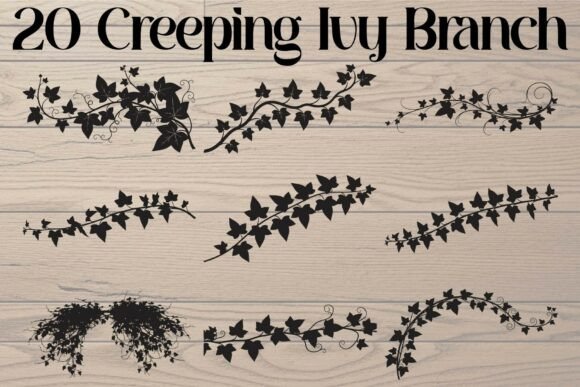
When I opened the Creeping Ivy Branch Silhouette bundle, what struck me wasn’t just botanical charm—it was intention. These 20 ivy silhouettes avoid the stiff, symmetrical clichés of clipart foliage. Instead, they breathe: trailing vines curl with subtle asymmetry, tendrils lift and dip like real growth, and leaf clusters vary in density—not cookie-cutter repeats. As a designer who regularly sources embroidery files for client work and my own craft business, I look for motifs that feel *alive* on fabric—not just placed there. This collection delivers quiet elegance, not forced whimsy. It reads as mature, refined, and quietly versatile—ideal for boutique branding, personalized gifts, or elevated handmade apparel.
Real-World Test: Stitching It onto a Linen Tea Towel
Last week, I prepped a small-batch holiday line for my Etsy shop: embroidered linen tea towels for kitchen gifting. I chose one mid-length Creeping Ivy Branch Silhouette to run diagonally from corner to corner—subtle but intentional. On screen, it looked delicate. Under needle? It held up beautifully. The clean silhouette translated cleanly into satin and fill stitch without excessive detail overload. No tiny disconnected leaves vanished in the stitching, no awkward gaps between vine segments. Because the design leans into negative space and confident line weight, it didn’t fight the texture of the linen—it conversed with it. Customers responded immediately: “It feels handmade, not mass-printed,” one wrote. That’s the quiet power of a well-considered silhouette.
Where It Shines—and Where to Pause
This isn’t a one-size-fits-all embroidery file. Its strength lies in context:
- Custom apparel: Works exceptionally well on sweatshirts, structured tote bags, and aprons—fabrics that support moderate stitch density and hold shape under hoop pressure.
- Baby embroidery: Soft, organic flow makes it perfect for onesies and nursery pillows—but avoid ultra-thin cotton jersey unless you reinforce with tear-away + cut-away stabilizer.
- Embroidered patch: Clean edges and consistent line weight mean crisp results when stitched, trimmed, and heat-sealed. Great for small shop merchandise or craft fair pins.
- Holiday embroidery & wedding gifts: Timeless botanical tone fits seamlessly into neutral palettes—think ivory thread on charcoal linen napkins or sage green on oatmeal canvas totes.
Use caution on:
- Curved surfaces (like caps or curved baby hats)—test hoop placement first; longer vines may distort near seams.
- Stretchy fabric (e.g., knits for t-shirts)—requires precise stabilization and possibly reduced stitch density to prevent puckering.
- Dark fabric—some lighter-weight versions in the bundle read softly; verify contrast in your chosen thread color before finalizing.
- Tiny hoop sizes (under 4”)—a few of the more elaborate vines in the set extend beyond compact framing. Check individual previews before assigning to small-format projects like keychain patches or cap brims.
Design Integrity Meets Customer Trust
In my experience, customers don’t just buy a pattern—they buy a feeling of care. When a Creeping Ivy Branch Silhouette appears on a hand-stitched pillow cover or an Etsy-sold sweatshirt, it signals thoughtfulness: not just “I added embroidery,” but “I chose something that moves with purpose.” That perception elevates perceived value. For small shop owners and creative entrepreneurs, this matters. A cohesive, confident motif like this strengthens brand consistency across product lines—whether you’re selling digital embroidery files or finished handmade products. It also performs well in printable mockups: clean outlines render crisply in black-and-white proofs, helping buyers visualize placement before purchase.
Practical Notes Every Embroidery Designer Should Keep Handy
Before stitching your first Creeping Ivy Branch Silhouette, do these five things:
- Test on scrap fabric—same type and weight as your final project. Watch how vines lay flat and whether leaf clusters stitch cleanly.
- Check thread color contrast—especially on textured or dark fabrics. A medium olive thread might disappear on forest-green canvas; go one shade darker or add a fine running stitch outline.
- Review stitch density—if your machine struggles with dense fills, consider simplifying a vine segment or switching part of the design to a lighter fill stitch.
- Confirm licensing—since this is a digital embroidery file in the Graphics category, verify whether commercial use (e.g., selling finished embroidered totes) is permitted, and whether resale of the digital file itself is restricted.
- Inspect small details—zoom in on digital previews for stray anchor points or micro-gaps. Clean vector-based silhouettes usually translate well, but always double-check before sending to production.
Final Thought: Botanical, Not Busy
What makes the Creeping Ivy Branch Silhouette stand out in a crowded Crafts marketplace isn’t novelty—it’s restraint. In an era of over-designed, hyper-detailed embroidery files, this collection trusts the viewer’s eye. It gives space for fabric texture, thread sheen, and human imperfection to shine alongside the motif. Whether you’re an Etsy seller building a seasonal collection, a small business owner refreshing boutique branding, or a hobbyist stitching heartfelt gifts, these silhouettes offer quiet confidence—not clutter. They don’t shout. They settle in. And that, in real-world embroidery, is where lasting appeal begins.