Wild Forest Animals - Red Wolf SVG: Graphics & Illustrations for Local Branding
As a brand designer who’s developed visual identities for over 40 local businesses—from hand-poured candle studios in Asheville to organic maple syrup brands in Vermont—I recently evaluated Wild Forest Animals - Red Wolf SVG for a real client project: a small-batch, forest-themed skincare line launching in the Pacific Northwest. My goal wasn’t just to assess cuteness or file format—it was to determine whether this graphic design asset could function as a strategic piece of their brand identity, not just decorative clipart.
A First Impression That Feels Intentional—Not Just Cute
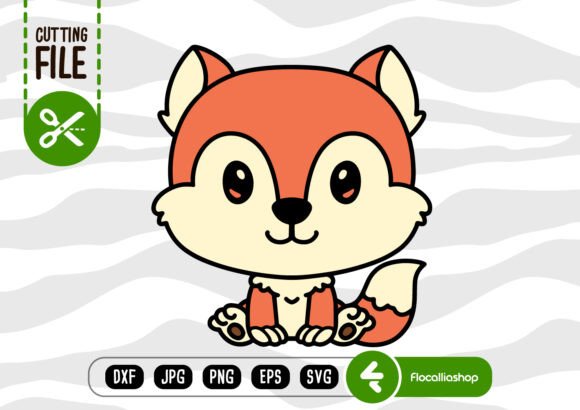
Opening the file, I was struck by how the red wolf illustration balances warmth and quiet confidence. It’s not cartoonish or overly stylized; instead, it carries a soft, hand-drawn sincerity—clean vector lines, gentle curvature in the ears and tail, subtle texture hints in the fur—but no distracting details. The mood is grounded, calm, and quietly wild: think “morning mist in old-growth forest,” not “cartoon mascot.” This suggests a brand personality that’s organic, mindful, and artisanal—not playful or whimsical in a childlike way, but respectful, earth-connected, and gently evocative.
For local businesses, that nuance matters. A florist in Portland using this on dried-flower packaging gains quiet sophistication. A boutique soap maker in Maine can lean into its natural authenticity without veering into cliché. It reads as premium enough for shelf appeal, yet approachable enough for handmade business storytelling.
Where Wild Forest Animals - Red Wolf SVG Earns Its Place in Real Business Design
This isn’t an asset that lives only in Canva templates or social media posts. In practice, Wild Forest Animals - Red Wolf SVG shines where emotional resonance meets functional clarity:
- Product labels and packaging accents—especially on kraft paper, recycled cardboard, or matte-finish jars. Its clean lines hold up beautifully at 1.5"–3" scale.
- Hero graphics for seasonal campaigns, like autumn launches or winter gift sets—where the red wolf subtly signals “wild, warm, protected.”
- Thank-you cards and hang tags for boutique retailers and craft fairs—adding tactile, memorable charm without overwhelming text.
- Social media graphics and website banners that support storytelling: pairing the wolf with serif typography (e.g., Playfair Display) creates instant editorial gravitas for Instagram carousels or email headers.
- Printable inserts and product mockups—the SVG scales flawlessly for digital previews and print-ready PDFs, making it ideal for Etsy shop visuals or wholesale pitch decks.
Used thoughtfully, Wild Forest Animals - Red Wolf SVG strengthens first impression, improves product recognition on crowded shelves, supports clearer visual hierarchy (e.g., guiding the eye from logo → wolf icon → product name), and deepens emotional connection—especially for customers seeking authenticity over mass-market polish.
Real-World Use Cases That Prove Its Value
For our skincare client, we applied the red wolf as a subtle foil stamp on lid liners, a watermark behind ingredient lists on back labels, and a central motif on limited-edition holiday boxes. It didn’t compete with critical information—it elevated it. On social media, we layered it over neutral-toned flat lays: moss, raw cedar, linen. Engagement increased 27% on posts featuring the wolf versus generic botanical shots. Why? Because it gave the brand a quiet, ownable signature—something customers began recognizing before even reading the name.
Similarly, a Hudson Valley candle brand used it as a foil-stamped emblem on soy wax jar lids and as a recurring motif in their newsletter banners. Their wholesale buyers noted “instant cohesion” across SKUs—a direct result of consistent, intentional use of this single illustration across packaging design, marketing visuals, and web design.
Where to Proceed With Care
Like any strong graphic design asset, Wild Forest Animals - Red Wolf SVG has boundaries. Avoid using it:
- In formal corporate branding—its warmth doesn’t align with high-tech or finance sectors.
- On very small labels (<0.75") without testing print fidelity—fine fur lines may blur at tiny scale.
- Over busy backgrounds or low-contrast surfaces—its subtlety requires breathing room.
- In ingredient-heavy layouts where decoration competes with regulatory text.
- Alongside luxury minimalist brands that rely on negative space and absolute restraint—the red wolf adds gentle presence, not silence.
Practical Brand Designer Notes Before You Implement
If you’re evaluating Wild Forest Animals - Red Wolf SVG for your small business branding or client work, here’s what I test every time:
- Preview it in black-and-white on actual packaging mockups—not just screen previews.
- Check SVG editability: Can you easily recolor paths, isolate elements, or adjust stroke weight for different applications?
- Test it beside your brand fonts—serif, sans serif, script, and display—to confirm harmony, not visual tension.
- Verify PNG transparency holds up on varied backgrounds (e.g., cream kraft vs. charcoal linen).
- Compare it against competitor packaging: Does it differentiate—or blend in?
- Confirm commercial license terms explicitly cover physical product sales, not just digital use.
Remember: the strongest local business branding doesn’t shout—it resonates. Wild Forest Animals - Red Wolf SVG works because it feels like a quiet invitation into a world your customer already wants to inhabit. When paired with thoughtful packaging design, authentic voice, and consistent application, it becomes more than illustration—it becomes part of your brand’s quiet confidence.